Showing posts with label Cape Ann. Show all posts

5.21.2026

Patiently waiting...

Hot then Cold then Hot - Welcome to Spring weather in New England!

The high heat brings forth new growth EVERYWHERE. The seedlings in the greenhouse are straining in their small containers. 

Last Spring I transplanted my tomato seedlings during a warm spell that was followed by a lot of rain and too cold days. The plants never recovered. 

6.25.2025

Playing in the Garden...

Join the fun at the Annisquam Herb Farm, Sunday, June 29 noon to 4:00.
 
 
There will be forty plants in the gardens with one of these markers waiting for you to identify them. Walk the paths by the vegetable beds, the flower patch with cultivated and wild, the raspberries, the peaches and more. 

Hope to see you there :) Sign up at: https://www.biddingforgood.com/auction/item/buynow.action?id=343690797

6.14.2025

Plants at the Annisquam Herb Farm...

In the beginning

The first attempt at gardening 

The First Attempt at Gardening

In 2005, I watched as plants emerged, curious to see how many herbs still flourished on this land. The only herb I found was Nicotiana—a familiar sight from my childhood, when I used to garden and take walks with my aunt.

Information:
Indian tobacco (Nicotiana) is a species traditionally used in religious rituals, as medicine, and for smoking by numerous Native American tribes. Though native to the Southwest, it has been introduced to New England and now occurs only in Massachusetts. Its long, tubular white flowers bloom atop sticky, hairy stems.


On to 2006...

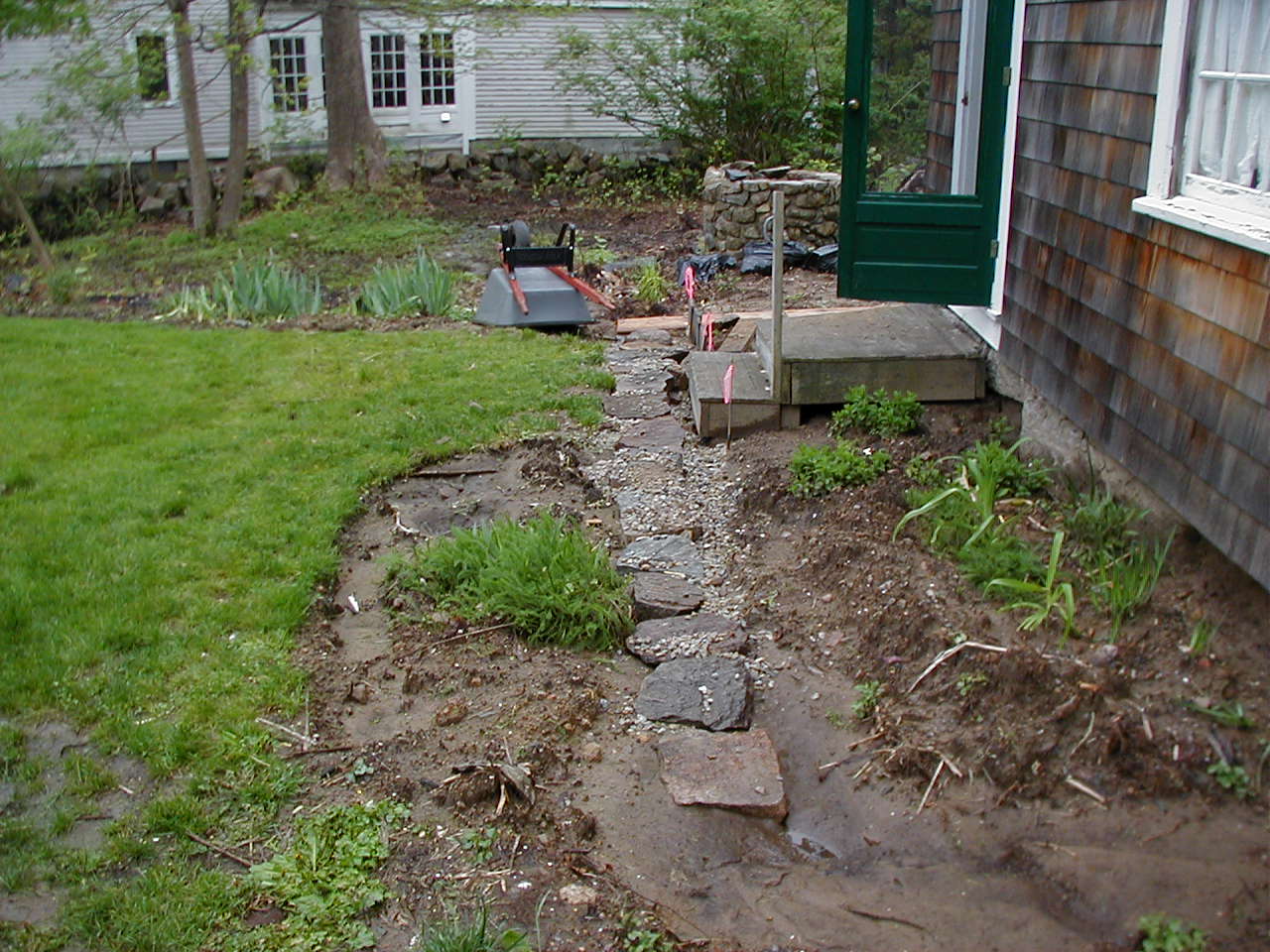
In January, renovations began. They left behind a massive pile of boulders, rocks, and soil from the foundation work that joined the original building with the potting shed and greenhouse. Everywhere I looked, there was work to be done. The greenhouse, draped in plastic sheeting, became temporary storage for tools and materials. That year, there would be no gardening.


Since 2006...

The boulders were put to use—formed into walls creating three terraces, each with two beds, and shoring up a small drive that led to the lower level where the new front door stood. To keep track of the projects, the terraces were given names: the Boatyard, where the clam skiff was stored for the winter; Victory Gardens 1 and 2; and at the rear, the Back 40, which was fenced off to keep the deer from devouring future crops.

Every time the shovel sank into the earth, there was a loud ting—metal striking stone. The soil was a pale yellowish hue: thin, lifeless. Even the soil inside the greenhouse was poor and unwelcoming. An early attempt to grow chard, parsley, and other greens ended in failure. As soon as the tender seedlings emerged, snails—and other unseen denizens of the soil—descended. They devoured nearly every leaf.

From that point on, all the kitchen scraps and yard debris were saved—either added to the greenhouse beds, tossed into the compost bin, or buried behind the future garden beds. We gathered marsh grass washed ashore on high tide, bought salt marsh hay, and mixed in peat moss.

Slowly, the soil began to change—in color, in texture. And then, at last, the plants began to thrive.

Grape arbors were built. Stone pathways were cleared. Perennials were planted: boxwood, started from a very old bush found at the back of the property; asparagus crowns that promised future harvests; and tomatoes so healthy they could be eaten ripe from the vine or turned into soups and sauces. Green beans grew crisp and sweet—so tender they hardly needed cooking. Winter squash vines trailed through the garden beds, and potatoes yielded a hearty supply for the cold months ahead.


In 2025...

Even though there is work to be done everywhere I cast my eye, it has become work that brings peace and contentment.

For years before coming here, I had dreamed of living in one place long enough to grow asparagus. That dream has come true. The fig trees now thrive in the greenhouse, happily producing their sticky, delicious fruit—enough to make jam. The Concord grapes had a bumper crop last year. There were enough to make grape preserves, with plenty left to share.

In addition to the annual food crops, we now have flowers—decorative, medicinal, wild, native, and cultivated—all living side by side: zinnias, lilies, calendula, lavender, poppies, peonies, yarrow, tansy, wild roses, echinacea, lunaria, nettle, catnip, catmint, goldenrod...

And trees and shrubs: winterberry, witch hazel, peach, pie cherry, hydrangea, dogwood, crabapple, hawthorn, walnut, butternut, hazelnut...

We are happy to share this sanctuary with family and friends—a place shaped by patience, persistence, and care. What was once stone and struggle has become a home, a garden, and a gathering place.

5.09.2017

Annisquam Sewing Circle Plant & Gourmet Food Sale!


May 13, 2017
(the Day before Mother's Day)
8:00am - 12 Noon
Come early for the best selection!

The Annisquam Exchange Yard
32 Leonard Street, Gloucester MA 01930

Annuals and perennials from local greenhouses plus plants from the gardens of Annisquam


New this year!

Planters ready to go or select your favorite plants and the members of the ASC will plant them in a containers of your choice.
Delicious gourmet foods prepared by the members of the Annisquam Sewing Circle
plus a few surprises!

12.04.2015

The Backyard Growers Program on Cape Ann

This is a wonderful program on Cape Ann!

Since 2010 Backyard Growers has built over 150 raised bed gardens, serving hundreds of Gloucester residents. We serve 100% of public school students from preschool to 6th grade, providing true seed-to-fork experiences for Gloucester kids. 

The Backyard Growers Program (BYG), in partnership with The Food Project, helps low- to moderate-income Gloucester residents create sustainable backyard vegetable gardens. They provide raised beds, compost, garden installation, seedlings, seeds, training, and mentoring.

To read more...For more information:


You can LIKE Backyard Growers Program on FaceBook.

4.18.2009

Never again . . .

will I start seeds without bottom heat! What a difference in the germination rate and strength of the seedlings.

The garden beds are all young and will need lots of new plants. Last year, after the repair of a major retaining wall, work began in earnest - lavender, thyme, oregano, clary sage, horseradish, potatoes, tomatoes, broccoli, fruit trees, and boxwood to name a few.

Because of the terrain the beds vary in character so have been named - The Back 40 (feet), Old Kitchen Garden, The Great Wall of Annisquam Garden and of course, a nod to Mr. James Crockett who inspired so many of us, The Victory Garden.

The greenhouse is almost four seasons. This spring and late winter gave us herbs, salad greens, broccoli and cauliflower from stock planted last year.

This year the greenhouse and gardens will be open for the
Cape Ann 10th Anniversary Garden Festival, June 20, so there is a lot of activity inside and out! Click here for Garden Festival information

8.04.2008

Blue Globe Thistle - Echinops

Naturally spiny, globe shaped, dried flowers on sturdy stems 25" tall. Each thistle globe is a delicate green with a touch of blue to blue.

Approx 20 globes per bunch
$8 per bunch
$24 for 4 bunches

Call to order 617.678.1075
Delivery on Cape Ann $2 per delivery

6.24.2008

Attracting Beneficial Insects to Your Garden

Because of the reduction in the bee population, it is more important than ever to invite bees and other insects to your garden to help with pollination and insert control. The following article, written by Mike McGoarty of freeplants.com offers many opportunities to do just that!

by Mike McGroarty

There are a variety of common plants and flowers that attract beneficial insects. Beneficial insects are not only attracted to plants which are infected with their insect prey, but they also tend to be selective about the plants on which they lay their eggs. Many beneficial insects also spend part of their lives surviving on the nectar and pollen of their favorite plants. Ideally, your garden plants will provide food, shelter and a nursery for beneficial insects. Some of these plants may already be in your garden.
Caterpillars, leafhoppers, beetles, moths and grubs are attacked by tiny parasitic wasps. Because they are so tiny themselves, parasitic wasps prefer tiny flowers when they want a drink of sweet nectar. Parasitic wasps will frequent a garden that features some yarrow, dill, parsley, Queen Ann's Lace or tansy. These umbrella-shaped flowers are very attractive to a number of beneficial insects.

Green lacewings and ladybugs will also appreciate the same umbrella-shaped flowers. They also like cosmos, prairie sunflower and even dandelions and alfalfa. Lacewings prefer to lay their eggs in shady areas that are protected from the weather. They'll be happy to find some of their favorite plants in a quiet, protected corner of the garden.

Various herbs are attractive to some beneficial insects. Adding some herbs here and there amongst your flowers or vegetables will surely lure some beneficial insects to work in your garden. Lemon balm, pennyroyal, spearmint and parsley will attract hoverflies, parasitic wasps and tachinid flies. Tachinid flies look like hairy house flies and they lay their eggs on caterpillars which can do a lot of damage in a garden. Tachinid fly larvae will destroy corn earworms, cabbage worms, armyworms, and other fly larvae.

Providing the proper plants for food and shelter is just one step toward attracting beneficial insects to your garden. The most important thing to do to encourage beneficial insects in your garden is to stop using chemical pesticides. Chemical pesticides are not selective and will kill both harmful and beneficial insects. Many organic insecticides are selective and when used properly, will not harm the beneficial insects.