Showing posts with label annisquam herb farm. Show all posts

5.21.2026

Patiently waiting...

Hot then Cold then Hot - Welcome to Spring weather in New England!

The high heat brings forth new growth EVERYWHERE. The seedlings in the greenhouse are straining in their small containers. 

Last Spring I transplanted my tomato seedlings during a warm spell that was followed by a lot of rain and too cold days. The plants never recovered. 

2.27.2026

Thinking Spring...


Years ago I was given a copy of Ruth Stout's book, No-Work Garden Book. It was first published in 1953. 

It open my thought to a more sustainable method to growing. Salt marsh hay has been used in the greenhouse to improve the poor soil and to provide insulation in the winter and the summer by keeping the soil temperature and moisture more consistent. Here at the Annisquam Herb Farm the area referred to as the Back 40 was planted with clover and buckwheat. The soil has been very heavy. Each year composted materials have been added but the soil was still in need of improvements.

This year the plan it to plant potatoes in rows leaving the clover and buckwheat in wide aisles in between. 

Benefits of No Till Systems

There are a lot of potential benefits that farmers and gardeners can reap when adopting reduced tillage or no-till practices. Some of the most common benefits include:
  • Reduced weed pressure
  • Better water infiltration and retention
  • Improved plant health due to improved soil health and structure
  • Reduced labor inputs
Reduced till or no-till practices aim to create a more holistic approach that mimics nature, and can be integrated into any size farm or garden. 

2.20.2026

Surface Pattern Design - Rhubarb

Rhubarb on My Mind...


From my collection of baskets in the greenhouse I was inspired to develop repeat patterns for fabric. 

Everything we look at has been designed by someone, some without patterns but most with some pattern. So far this path is a bit retro in feel. Come back to see where is journey takes me :)


1.21.2026

On a Cold, Winter Morning...

Is it a Soup Day?

The thermometers all say the outside temperature is in the upper teens. An excellent day to prepare soup for supper.

Yesterday we bought some beautiful leeks from Quebec. One beauty is now in the soup pot in a Colcannon Soup.

Recipe:

  • 1 onion, diced
  • 4 T butter
  • Melt the butter in a soup pot. Add the onion and onion. Saute until soft. 
  • Dice
  • 4 med. potatoes
  • Add to soup pot. Cook for 5 minutes 
  • While that is cooking, thinly slice 
  • 1 C cabbage
  • 1 C kale after removing the stems
  • Add 
  • 3 C vegetable stock 
  • Bring to a boil. 
  • Add the cabbage and the kale
  • Reduce the heat. Cook for 15 - 20 minutes.
  • With an immersion blender, puree. 
  • Now your soup can be left on the stove until it is time to heat for supper.
  • Heat until warm. Add
  • 1 C milk. 
  • Heat but do not boil. 

PS:

  • I am planning on using 
  • 0.5 C Greek yogurt 
  • 0.5 C cream 


1.12.2026

Contact AHF


I would love to stay in touch with you. 

Stay informed about: 

  • Scheduled Workshops
  • Garden Tours
  • Fire Ceremonies
  • Other A.H.F. Events

Click here to add your email to the Annisquam Herb Farm group.

1.10.2026

What is Beltane?

Ceremonial Fire in Ireland

Beltane is a fire festival celebrating the growing warmth of the sun and the return of longer daylight hours. To celebrate at home light a small fire in a fire pit or indoors, light a candle. The Beltane fire is believed to have protective and purifying properties. with your fire lit,  focus on a transformation you would like to manifest as your flames become brighter. Collect a small item, a bit of plant material or the transformation you would like on a small piece of paper. Place your item into the fire where the idea is released into the universe cleaning you of doubt, anger and fear.

#annisquam #annisquamherbfarm #ceremonialfire 


1.05.2026

Clear the Air

Ceremonial Fires

The tradition of using ceremonial fires for purification and emotional release is found in many cultures.

To many the full moon represents fullness, completion and the culmination of energy. It is an ideal time to manifest intentions, “clear the air”, celebrate achievements. Rituals conducted on the night of the full moon focus on gratitude, reflection, releasing of grief and acknowledging progress.

#annisquam #annisquamherbfarm #ceremonialfire


8.28.2025

Getting Ready for the Annisquam Arts & Crafts Show...

Annisquam Arts & Crafts Show

Oct 11-12, 2025

10 AM-5 PM

Annisquam Village Hall

36 Leonard St, Gloucester, MA 

​Opening Gala Event for Sponsors Oct 10th 6-9 PM

To Sponsor, please click below

https://annisquamvillagechurch.org/giving/

7.30.2025

Gathering plant materials from the garden...

Lavender, thyme, sage and rosemary...

The potting shed is home to bundles of plant materials to use in salves, dried arrangements, teas, etc. The season of gathering passes quickly, or at least, it feels that way here. A few of the plants grown here are suggested for use in making a garland, as listed in the information below. Garlands are one way to decorate your table for a gathering with fresh or dried plant material.

Herbal Garlands


Garlands aren’t just for looks: they can have purpose too! Mix flowers with herbs like calendula, chamomile, lavender, rosemary, or thyme for a healing twist. These bring color and texture while offering benefits like calming scents or antibacterial properties.

Here are a few healing herbs that will make great additions to your garland.

Lavender – Known for its calming, floral scent, reducing stress and promoting restful sleep

Rosemary – Piney-scented herb for mental clarity and focus, to boost memory and concentration

Thyme – Uplifting and purifying, to freshen the air

Sage – For cleansing spaces, clearing negative energy, protective and purifying

Extracted from an article written by Jenny Bar, www.learningherbs.com/blog, how to make flower garlands

#annisquam @annisquamherbfarm #lavender #sage #thyme #rosemary #diygarland #learningherbs #learningherbsonline

6.25.2025

Playing in the Garden...

Join the fun at the Annisquam Herb Farm, Sunday, June 29 noon to 4:00.
 
 
There will be forty plants in the gardens with one of these markers waiting for you to identify them. Walk the paths by the vegetable beds, the flower patch with cultivated and wild, the raspberries, the peaches and more. 

Hope to see you there :) Sign up at: https://www.biddingforgood.com/auction/item/buynow.action?id=343690797

Annisquam Village Church Online Auction . . .

The Annisquam Village Church Online Auction 2025 is open 

and will run to June 29, 2025, 

with proceeds going to support the mission of the church including our outreach programs that support the Open Door, The Grace Center and Action Inc.

Auction items range from vacation getaways to donated items guaranteed to delight and surprise.

To browse all the items, click here: https://www.biddingforgood.com/auction/item/browse.action?auctionId=341801780

6.14.2025

Plants at the Annisquam Herb Farm...

In the beginning

The first attempt at gardening 

The First Attempt at Gardening

In 2005, I watched as plants emerged, curious to see how many herbs still flourished on this land. The only herb I found was Nicotiana—a familiar sight from my childhood, when I used to garden and take walks with my aunt.

Information:
Indian tobacco (Nicotiana) is a species traditionally used in religious rituals, as medicine, and for smoking by numerous Native American tribes. Though native to the Southwest, it has been introduced to New England and now occurs only in Massachusetts. Its long, tubular white flowers bloom atop sticky, hairy stems.


On to 2006...

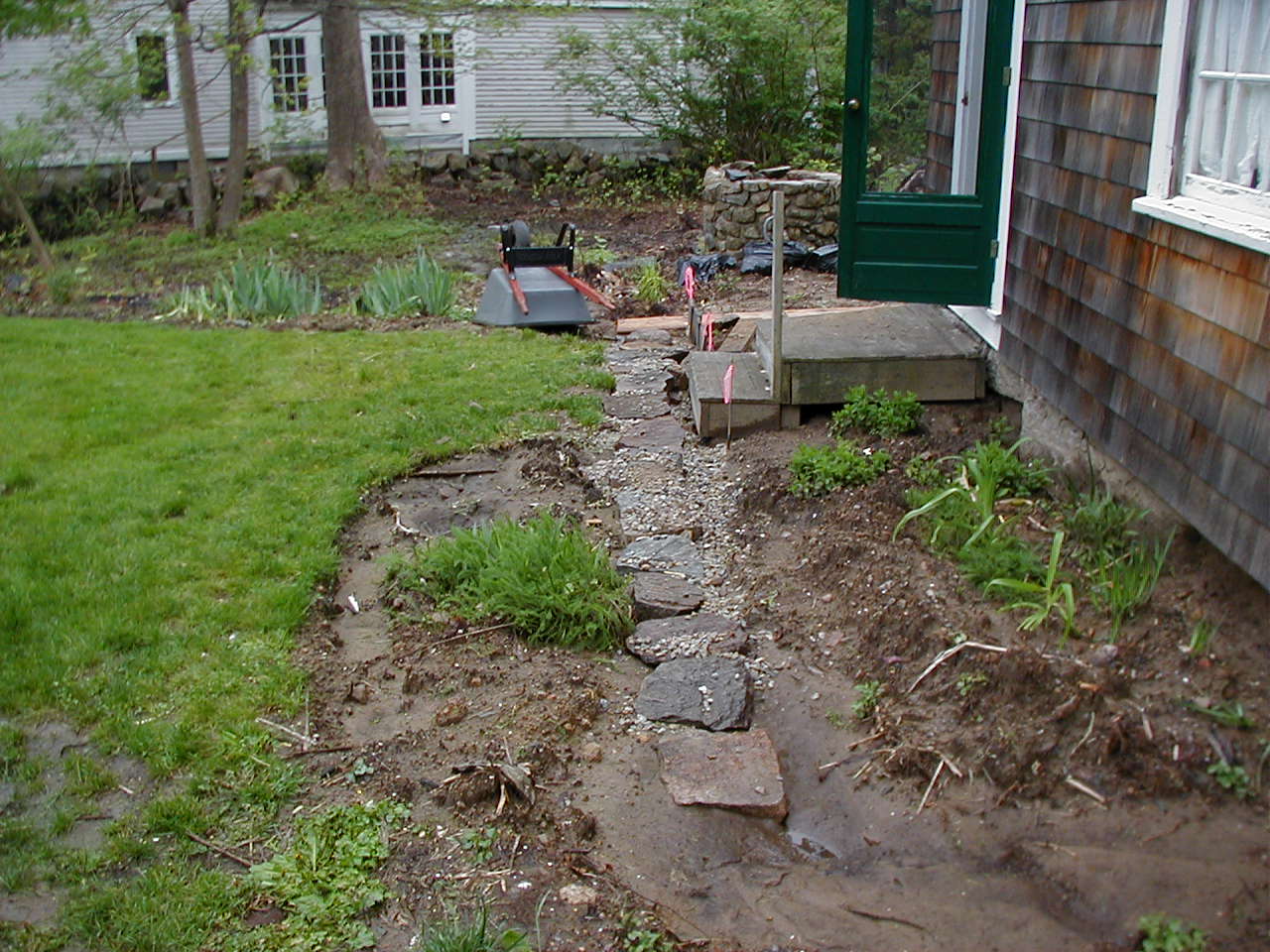
In January, renovations began. They left behind a massive pile of boulders, rocks, and soil from the foundation work that joined the original building with the potting shed and greenhouse. Everywhere I looked, there was work to be done. The greenhouse, draped in plastic sheeting, became temporary storage for tools and materials. That year, there would be no gardening.


Since 2006...

The boulders were put to use—formed into walls creating three terraces, each with two beds, and shoring up a small drive that led to the lower level where the new front door stood. To keep track of the projects, the terraces were given names: the Boatyard, where the clam skiff was stored for the winter; Victory Gardens 1 and 2; and at the rear, the Back 40, which was fenced off to keep the deer from devouring future crops.

Every time the shovel sank into the earth, there was a loud ting—metal striking stone. The soil was a pale yellowish hue: thin, lifeless. Even the soil inside the greenhouse was poor and unwelcoming. An early attempt to grow chard, parsley, and other greens ended in failure. As soon as the tender seedlings emerged, snails—and other unseen denizens of the soil—descended. They devoured nearly every leaf.

From that point on, all the kitchen scraps and yard debris were saved—either added to the greenhouse beds, tossed into the compost bin, or buried behind the future garden beds. We gathered marsh grass washed ashore on high tide, bought salt marsh hay, and mixed in peat moss.

Slowly, the soil began to change—in color, in texture. And then, at last, the plants began to thrive.

Grape arbors were built. Stone pathways were cleared. Perennials were planted: boxwood, started from a very old bush found at the back of the property; asparagus crowns that promised future harvests; and tomatoes so healthy they could be eaten ripe from the vine or turned into soups and sauces. Green beans grew crisp and sweet—so tender they hardly needed cooking. Winter squash vines trailed through the garden beds, and potatoes yielded a hearty supply for the cold months ahead.


In 2025...

Even though there is work to be done everywhere I cast my eye, it has become work that brings peace and contentment.

For years before coming here, I had dreamed of living in one place long enough to grow asparagus. That dream has come true. The fig trees now thrive in the greenhouse, happily producing their sticky, delicious fruit—enough to make jam. The Concord grapes had a bumper crop last year. There were enough to make grape preserves, with plenty left to share.

In addition to the annual food crops, we now have flowers—decorative, medicinal, wild, native, and cultivated—all living side by side: zinnias, lilies, calendula, lavender, poppies, peonies, yarrow, tansy, wild roses, echinacea, lunaria, nettle, catnip, catmint, goldenrod...

And trees and shrubs: winterberry, witch hazel, peach, pie cherry, hydrangea, dogwood, crabapple, hawthorn, walnut, butternut, hazelnut...

We are happy to share this sanctuary with family and friends—a place shaped by patience, persistence, and care. What was once stone and struggle has become a home, a garden, and a gathering place.

Use to be an Herb Farm...


Tour the Annisquam Herb Farm
A Fundraiser for Annisquam Village Church

Join us for an opportunity to explore the grounds of the Annisquam Herb Farm, tucked away on the outskirts of the village. 

Link to the Annisquam Village Church Online Auction

Link to the AHF Tour


Once part of the historic Norton Farm, which stretched all the way to Ipswich Bay, the property now spans three-quarters of an acre and retains its rich natural heritage.

Instructions

The auction is a Buy It Now auction so you can secure your spot on the tour while the online auction is open between Saturday, June 14th, 8 AM - Saturday, June 28th at noon

Link to the AHF Tour

Much of this enchanting landscape has been left in its natural state, allowing native and wild plants to thrive—many brought in by the animals that call this land home. As you tour the grounds, you may catch a glimpse of foxes, coyotes, rabbits, gray and red squirrels, groundhogs, chipmunks, ducks, and a wide variety of birds.

Come experience the quiet magic of this land, learn about its history and ecology, and support the Annisquam Village Church in the process.

How It All Began

I stumbled upon the property by chance—no intention to buy, just curiosity. The listing read: Used to be an herb farm. When we pulled up at the end of Dennis Court, I spotted the wooden frame of a greenhouse below. A greenhouse! What a delightful and unexpected surprise.

The days that followed were a blur—calculating costs, making an offer, and, to my amazement, having it accepted. Once the purchase was finalized, the focus turned to planning. We set out to enlarge the main building, connecting it to the potting shed and greenhouse. We added a new kitchen, another bedroom and bath, and those long-missing closets—always with the goal of making the addition look as though it had always been there.

Shaping the Land

Outside, boulders dug from the foundation hole were repurposed to create terraces and a driveway along the sloping landscape. Beyond the greenhouse, we added a workshop and storage area to support the growing work ahead.

My first attempt at growing food in the greenhouse was a total failure—every plant devoured by insects and slugs. The soil was too poor to sustain anything. That’s when composting began in earnest. I dug kitchen scraps directly into the beds, and a compost bin was added out back.

Outdoors, the challenge continued: every time I pushed a shovel into the ground, I hit stone. The soil was compacted, yellow, and unyielding—but even then, the land’s potential could be felt.

Today, compost piles are found behind most garden beds, quietly transforming waste into fertile soil. At the start of each gardening season, decomposed material is added to the areas that need it most—continuing the slow, steady process of healing and renewal.

What You’ll See

As you explore the gardens and greenhouse, you’ll find a mix of cultivated and wild growth — peach, pear and cherry trees, herbs, vegetables, a scattering of flowers and even fig trees. 


Many of the thriving plants were introduced by our native “helpers”—wildlife that have carried seeds in over time. Keep an eye out for stinging nettle, echinacea, Solomon’s seal, poppies, knotweed, and yes—even poison ivy. 


Special Feature: An Edible Landscape

With the expert assistance of Alex Sands and his crew at Annisquam Landcare, the front garden is being transformed into an edible landscape. It's now home to many plants that provide nourishment—ideally for us, but often shared with our wild “helpers.”

Make It a Game

To add a bit of fun to your visit, pick up a card at the entrance with a list of plant names. As you stroll through the gardens, look for numbered markers and try to match them to the plant names on your card. Curious about what you're seeing? Reference binders will be available with more detailed information on many of the plants growing here.

Link to the AHF Tour


5.24.2025

Moving Day at the Annisquam Herb Farm

Lavender Moving Day -

This is one of my first lavender plants. It will be moved to a more suitable location in the garden. Two were moved before the massive rains and the root systems were quite small which led me to check the requirements before digging this larger plant and removing the plants that have moved themselves into its space.

This website has useful information on lavender roots: https://greg.app/lavender-roots/

The Annisquam Sewing Circle is working on a project for the Annual Christmas Fair that involves a substantial amount of lavender blossoms we hope to gather from gardens in Annisquam! The Fair is held on the first Saturday in December in the newly renovated Annisquam Village Hall.

https://theannisquamsewingcircle.org
http://www.annisquamherbfarm.com/

#annisquam
#annisquamsewingcircle
#annisquamherbfarm
#christmasfair
#annisquamvillage
#annisquamvillagehall
#annisquamvillage

5.23.2025

Cold and Windy! Warm Weather on the Way Again.

Spring has Not Forgotten Us!

With the warm weather earlier this month the greenhouse plants have burst forth! 

Trying some plants made especially for growing in a greenhouse from Johnny's Selected Seeds. 

Seeds started in Coast of Maine Seed Starter Mix, 

Fertilizer for established plants: Neptune's Harvest Fish & Seaweed and Espoma: Greensand, Bloodmeal and Rock Phosphate.

6.22.2024

Again in 2024 - the Annisquam Arts & Crafts Show in October


Our celebrated, Massachusetts State Senator, Bruce Tarr and Gloucester Councillor, Val Gilman partnered to auction an Andean style hat to benefit the Annisquam Village Church. 

Gardening is only one of the activities here at the Annisquam Herb Farm. Years ago I learned to knit and more recently spent hours knitting with my wonderful friend, Grace Murray. Grace knit and gave away over 400 hats to family, friends and local non-profit organization like the Annisquam Sewing Circle. This hat is a nod to her generosity in sharing here talents. I was delighted when the final bid came in at $525! I have signed up again to be a vendor at the annual Annisquam Arts & Crafts Show. Every year the offerings vary. Will see what makes it to my table in October in 2024 :) More info at http://www.annisquamherbfarm.com/

Summer squash, Artichokes & Blueberries...


After three days of higher than normal heat, we have having much needed rain. 

The sad news first - A new bad was created in the spring and ten broccoli seedlings were planted in it. They were coming along very well until - the heat hit. The soil dried out extremely fast. The plants were nearly all reduced to skeletons. It is a perfect example of the soil not being amended well enough before the plants were installed. I have no one to blame but myself! 
 
The good news - the oldest blueberry bushes are loaded wit berries. Even the four transplanted shrubs have berries. The summer squash has put out a few baby squash. The artichokes, started in the greenhouse last year have a blossom a piece on five of the six. 
 
Now the bad news/good news - the artichokes are planted MUCH to close together so a new bed must be prepared for them.

12.21.2020

Lane's Cove Breakwater - Note cards


Lane's Cove Breakwater 

Gloucester, Massachusetts

From a watercolor painting by S. Brown. 
Original in a private collection.
 
Blank note self-mailer
Printed on 65 lb. Card stock
Includes 5 clear, self-stick, mailing seals
Packet of five -  $6
Free postage within the Unites States

10.03.2017

Eucalpytus Breathe-Easier Salve

Eucalyptus Breathe-Easier Salve

  • Apply a small amount on the bottom of both feet at bedtime or as needed

  • Ingredients: Natural oils & butters, eucalyptus essential oil 

Eucalyptus: What are the health benefits?

Chinese, Indian Ayurvedic, Greek, and European medicine have used eucalyptus for thousands of years. Eucalyptus is a fast-growing evergreen tree native to Australia. 

Eucalyptus essential oil is effective for treating respiratory problems including cold, cough, running nose, sore throat, asthma, nasal congestion, bronchitis, and sinusitis. Eucalyptus oil is antibacterial, anti-fungal, antimicrobial, antiviral, anti-inflammatory and decongestant in nature. A study published in 2004 shows its usefulness in treating nonbacterial sinusitis. Eucalyptus oil may have antibacterial effects on pathogenic bacteria in the upper respiratory tract, including Haemophilus influenzae and some strains of streptococcus.


Annisquam Herb Farm